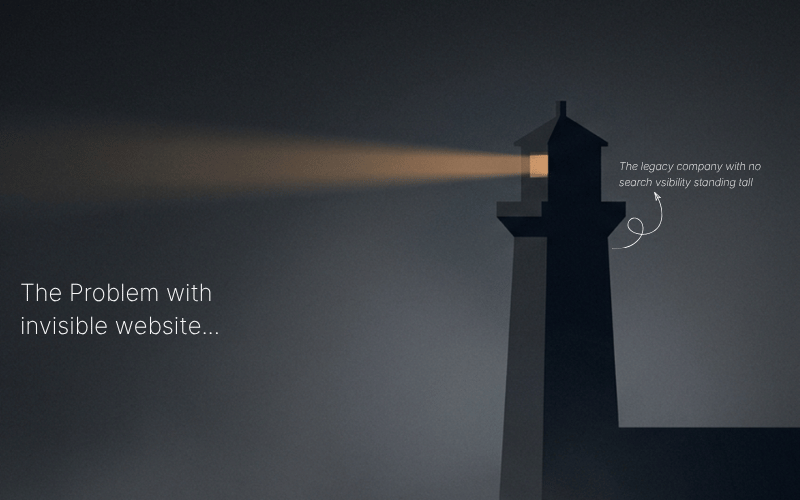
Most manufacturer websites aren’t bad.
Nobody visits them and thinks, “this is terrible.” They think nothing at all.
The site sits there. It lists products. It has a logo. Maybe a brochure PDF from 2019. And every week, your ideal customer types your exact product into Google, clicks on your competitor instead, and never knows you existed.
Because your competitor showed up. You didn’t.
That’s not a design problem. It’s an invisibility problem. And surprisingly, companies are not realizing this. Some owner-driven companies focus more on the website development and aesthetics, and once that is achieved, they forget they even had a website.
The quiet killer
A bad website repels people. An invisible website just… isn’t there when it counts. I am a firm believer of the belief that there is no bad website; even in some cases bad websites generate leads. Its important that your website should be visibile. It can be on any social platform, Google reviews, Quora, or you can choose to do SEO, AEO or GEO in today’s AI-powered marketing.
And that’s the real danger. A bad website at least gets a reaction. You can see people bouncing, leaving, losing interest. You get feedback. An invisible website gives you nothing. No bounce rate to fix, no angry call, no complaint.
Just silence.
You lose deals you never knew existed. You don’t get ghosted; you never got found. And because nobody ever tells you about a deal they couldn’t find you for, the problem stays hidden for years.
This isn’t rare. It’s the default for manufacturing and legacy-product companies.
The website is just sitting on your email signature with zero to no visbility and as manufacturing companies get busy with their manufacturing activities. Website marketing comes last on the priority list.
Not because the founders don’t care, but because they’re solving the wrong problem.
Where the effort actually goes
Here’s the pattern I keep seeing.
Owners pour time, money, and endless revision cycles into the aesthetics of the website. The hero image. The font. The exact shade of blue. They chase a “premium look” and then want to check the visibility box at the end with AI alone.
Two problems with that.
First, the wrong battle. A beautiful homepage that nobody finds is still an invisible website. You’ve polished a room nobody walks into. The buyer’s problem was never that your logo was dated; it’s that your competitor answered their question first. Visibility, not aesthetics, decides whether the deal exists at all.
Second, mistaking AI for a strategy. There’s real temptation to have AI “improve the website” in a day and call it done. AI is brilliant at generating copy and ideas. It is not a substitute for deliberate, manual website development built around how your buyers actually search and buy. AI can fill the pages; it can’t decide what should be findable, structure your proof, or wire your positioning to the searches that matter. That’s work with three layers, and skipping it leaves you with a fast-looking site that still isn’t there when it counts.
And Nowadays, every owner is obsessed with AI. Fine, but they are not realizing that “Energy needs to be put in on the “Marketing of the website/brand.” Utilize using AI for marketing of the SEO and focusing on brand building through the website content.
The fix: position, then proof, then presence
The fix isn’t a prettier homepage. It’s three things, in order.
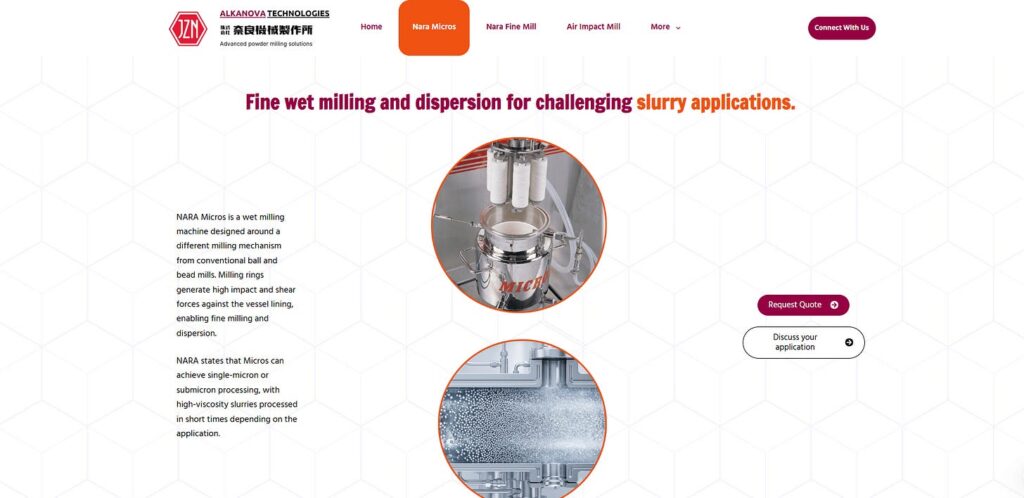
Position. One sentence that says who you serve and why you win with them. Not “quality products and great service.” Something a real buyer can nod at. If your positioning sentence could sit on any competitor’s site in your category, you don’t have one yet.
Here’s and Example:
Proof. The case study, the client name, the spec, the number. B2B buyers don’t want claims; they want evidence they can carry to their boss. A claim says “trust us.” Proof says “here’s a company like you, here’s what happened.” That’s what turns a visit into a shortlist.
Heres how you can approach this:
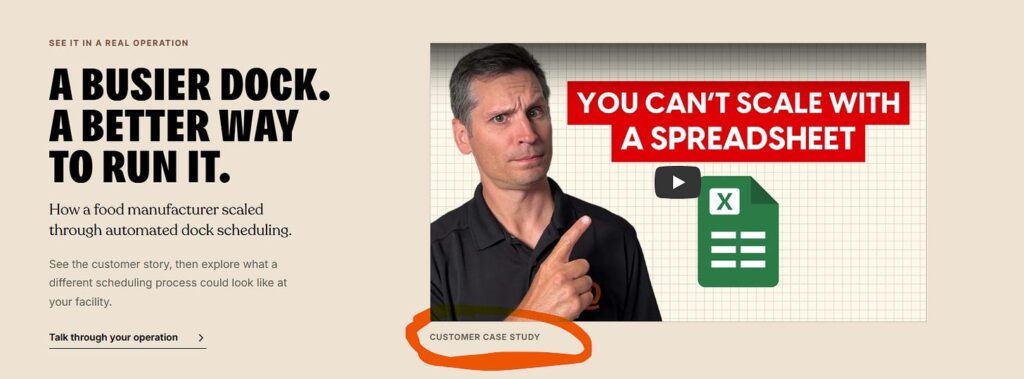
Presence. Showing up where the search actually happens, on purpose and consistently. Not a flurry of AI-generated pages. A deliberate answer to the real questions your buyers type, maintained over time.
Check out the detailed page by Apple Inc.
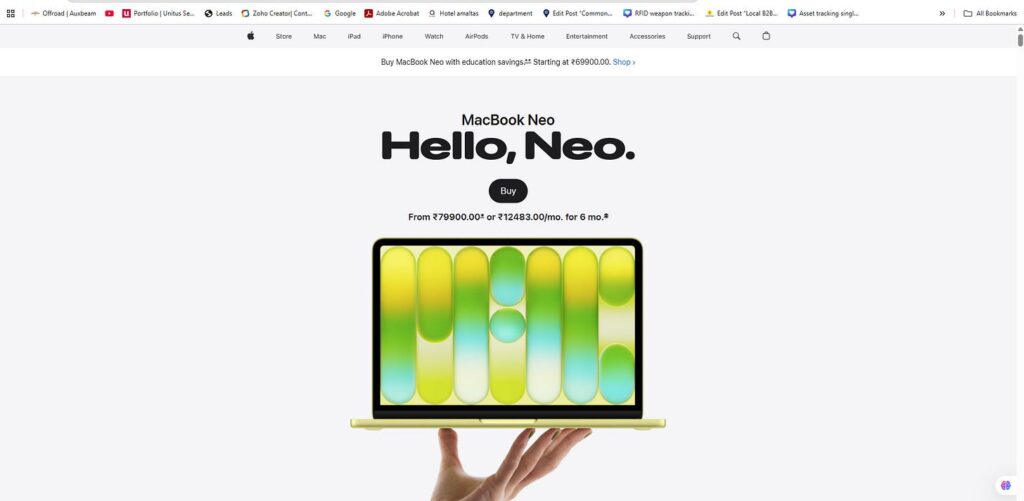
Speak with extreme depth and Create the best version of whatever you’re selling
Focus on being more specific. Talk about the topics in details; put as much technical information as possible. Most of the manufacturing companies and their owners fear that their technical information might be leaked. To them, I’ll say this:
Wake up!
AI has already commoditized mostly 90% of the knowledge we had.
Even Apple explains all its features on the website, even though it’s a Market Leader. Because they know the fundamentals.
Most manufacturing sites are missing all three. Not broken. Just missing.
The good news
Your competitors are mostly invisible too.
They’re stuck in the same loop, polishing a site nobody finds while the buyer keeps going to whoever showed up. That means the first company that simply becomes findable wins the category by default.
You don’t need to be loud.
You need to be there.
And “there” starts with visibility done deliberately, not an afterthought. Put the position on the page. Put the proof in front of the buyer. Then make sure the site is actually built for the searches that matter.
If you’re ready to stop being invisible, this is where you start.